


Anti-X Doors
Lead-lined X-ray Shielding Door
- Hinged X-ray Shielding Door
- Sliding X-ray Shielding Door
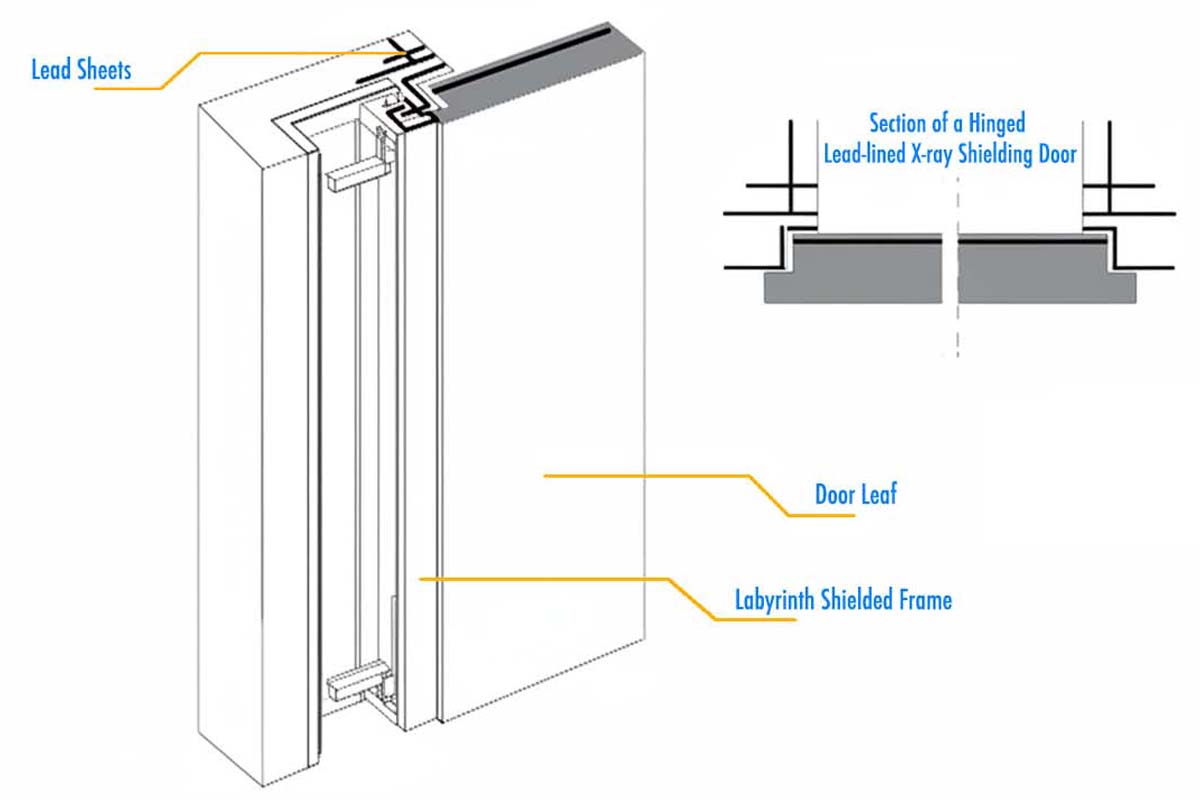
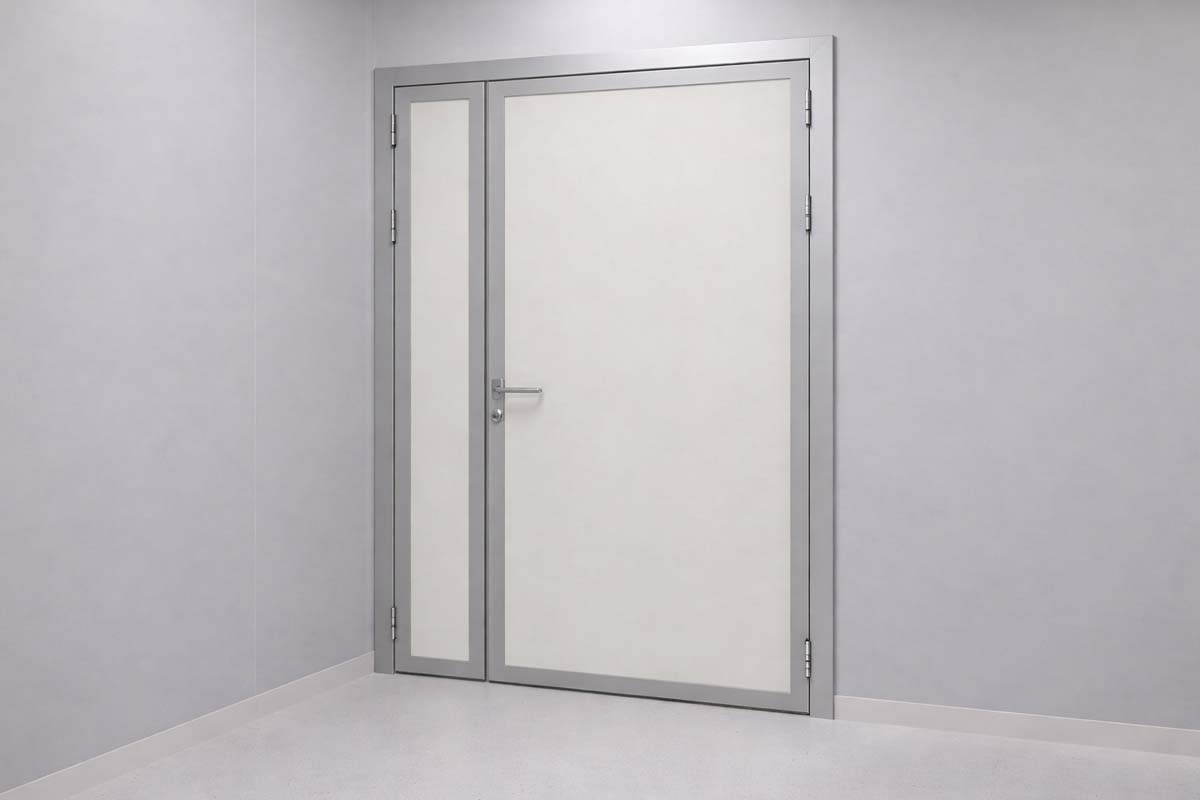
The lead-lined hinged X-ray protective door, available in single- or double-leaf configurations, is designed to ensure maximum protection against ionizing radiation, combining structural strength, functionality, and refined aesthetics. Each construction element is engineered to guarantee continuous shielding and seamless integration with perimeter walls, as required in healthcare and diagnostic environments.
Structure and Materials
The door leaf is constructed with a solid-core hardwood panel, inside which a first-cast lead sheet (99.9% purity) is inserted, calibrated and brushed to ensure uniformity and consistent protection. The external finish can be made of scratch-resistant plastic laminate, available in a wide range of customizable colors, or stainless steel, ideal for environments requiring high standards of hygiene and durability. The perimeter edges are reinforced with extruded aluminum profiles, while the load-bearing frames and architraves, also made of silver anodized aluminum, are internally lead-lined to maintain shielding continuity along the entire door opening.
Frame and Construction Details
The door perimeter is finished with flush profiles, ensuring a clean, linear appearance and perfect alignment with the wall. The door leaves can be solid or equipped with anti-x viewing windows, allowing observation of adjacent areas while maintaining high shielding performance.
The labyrinth frame, made of solid wood and specifically shielded, enables proper integration of lead sheets and ensures continuous protection between the door and surrounding walls. Finishes are made with press-bent anodized aluminum or epoxy powder-coated aluminum, available in all RAL colors to meet aesthetic and architectural requirements. The frame and vertical post can be manufactured in wood or press-bent laminate, both customizable in RAL colors.
Accessories and Options
Each door is supplied with an ergonomic handle, a lock with Yale cylinder, and reinforced hinges to ensure stability and long-term durability.
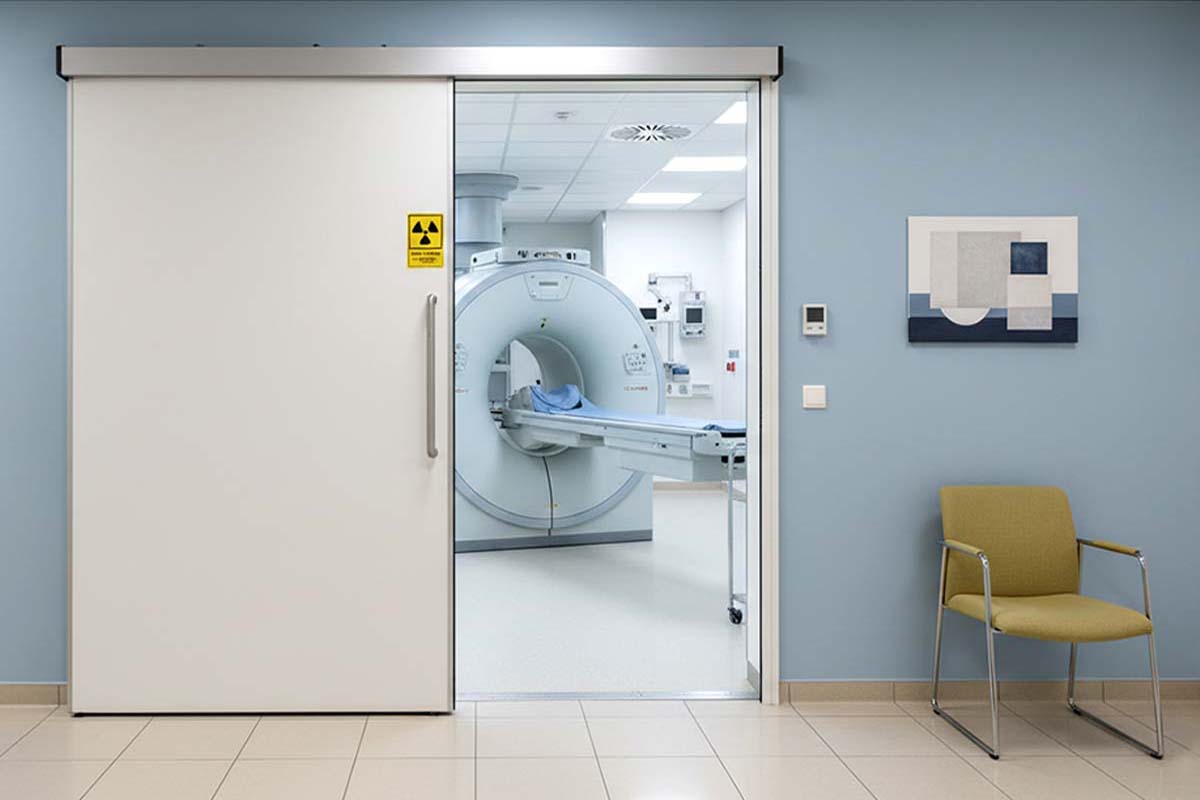
Sliding lead-lined X-ray protective doors represent a modern, functional, and aesthetically refined solution for ensuring protection against ionizing radiation in healthcare and diagnostic environments. Designed for intensive use, they combine effective shielding performance, smooth operation, and customizable design, perfectly adapting to spaces where surface optimization and a high level of safety are required.
Structure and Materials
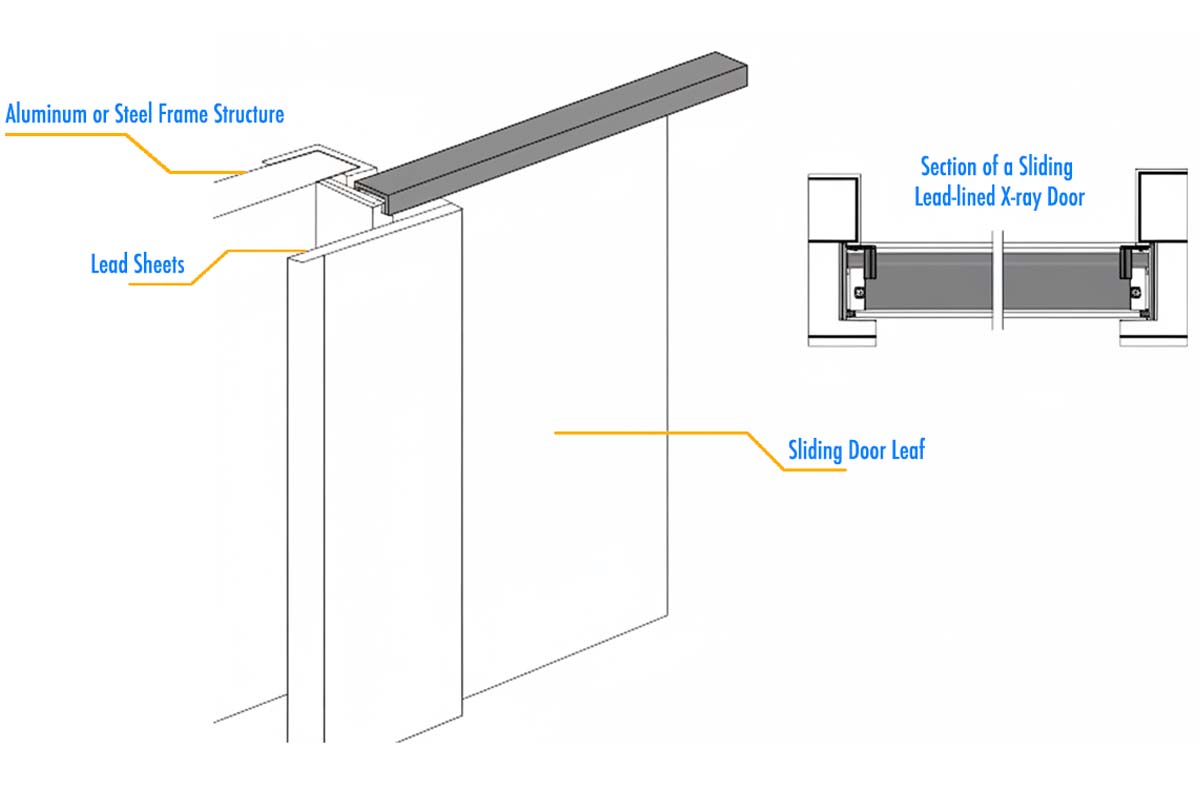
The door leaves are constructed with high-density solid-core wooden panels, incorporating a first-cast lead sheet (99.9% purity), carefully calibrated and brushed to ensure continuous shielding. The surface finish is available in scratch-resistant plastic laminate or stainless steel, both offered in a range of finishes and RAL colors to ensure seamless integration into any architectural or healthcare setting. The perimeter edges are protected by anodized extruded aluminum profiles, providing strength and long-term durability.
The door movement is supported by a high-strength extruded aluminum monorail system, along which double trolleys made of synthetic material slide, featuring a stainless steel central pin mounted on an elastic joint. This system ensures smooth, stable, and silent operation, even for large or heavy doors. End-of-travel devices and automatic stops are integrated to allow controlled opening and closing. At the base of the door, an anti-derailment guide is installed, which—thanks to its recessed channel that keeps the threshold clear while ensuring perfect alignment. The perimeter is finished with anodized aluminum framing, while the side edges are protected by U-shaped aluminum profiles.
Accessories and Options
The door leaves can be solid, for complete shielding, or equipped with anti-x lead glass viewing windows, allowing visual supervision without compromising protection. Each door is supplied complete with ergonomic handles, a rail cover pelmet, and all installation accessories to ensure easy and long-lasting installation. The frame and vertical post can be made of wood or press-bent sheet metal, both customizable in RAL colors to match the surrounding environment.
Key Features
- Solid-core wooden structure with 99.9% pure lead sheet
- Finish in plastic laminate or stainless steel, available in RAL colors. Anodized extruded aluminum profiles
- Upper aluminum monorail with elastic trolleys for smooth operation
- Anti-derailment bottom guide with clear threshold. Optional X-ray protective lead glass viewing window
Applications
Certified Quality
Maintenance Services
Customer Support
or email us at info@schermax.it
We Are Here